Blog - The paradox of skill levels
In some activities, paradoxically, professionals need less skill and effort than amateurs, and several examples of these activities seem to have affected me!
As you progress in life, in sporting activities, social events, and community life, you would think that the level of skill and the amount of effort required to fulfil a role would get higher. In fact, it seems to me, that in some activities that I have been involved with, the opposite is paradoxically true, that a higher level of skill and effort is required when starting out as a beginner than later if you have the luck to become a professional in that field.
Cricket
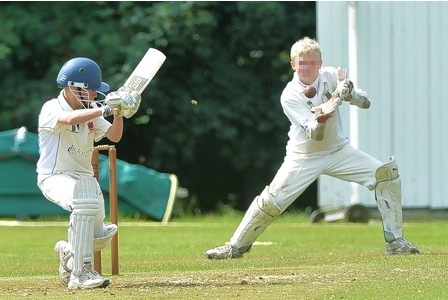 I first had this thought at school when I was playing cricket for the Second XI and somehow got volunteered to be wicket keeper. The first job of a wicket keeper is to stop the ball when the batsman does not hit it. If the bowler is accurate, then the wicket keeper shouldn’t have to move too far to successfully stop the ball, but the more wayward the bowler, the more work the wicket keeper has to do. I well remember having to stand many yards back behind the stumps and to be ready to sprint to the left or right to be able to stop a wide ball.
The next thing a wicket keeper has to do is to catch the ball when it is thrown in by a fielder after the batsman has hit it. The wicket keeper should stand right behind the stumps, as the teacher was always telling me, and catch the ball just a few inches over the top of the bails. This assumes of course that the throw is absolutely accurate, but with schoolboy fielders it never was - I could end up running yards, jumping and diving to try to catch the ball. Then there is no chance of ever running out the batsman.
The other thing a wicket keeper is supposed to do when a slow bowler is bowling is to stand right up behind the stumps and watch for stumping opportunities. This relies on being able to catch the ball right behind the batsman which in turn relies on the bowler bowling accurately and also the batsman not wheeling round so wildly that there was a chance he might belt you in the head with his bat. For these reasons, I almost never stood up right behind the stumps, and preferred to incur the wrath of the games teacher.
I haven’t played cricket since I left education, except for three or four one-off games many years ago.
Conducting a choir or orchestra
A professional conductor, conducting a professional group of musicians, can expect the players and/or singers to either know the music well enough or to be able to read the music well enough to be able to play it correctly, with good tone, with most of the correct dynamics and intonations, a good balance of parts etc..
The conductor’s job is then to add their own interpretation of the music, the nuances, the emotions, and so on.
However, for an amateur conductor, leading an amateur group of players or singers, there is so much more to do before this stage can be reached, if indeed it ever is.
There are the playing or singing techniques to get good tone, getting the notes right, getting the balance right, playing or singing together, in tune, being able to read music, etc.
So when leading the amateur choirs that I am involved with, nearly all my time is spent on these lower-level tasks, which can take a long time, and very little (if any) time is spent on the more nuanced interpretation of the music.
A professional conductor also has a much easier job choosing music, and a much greater choice of music, because he can expect his choir or orchestra to be able to perform any standard of music. I am severely restricted in the music I can choose, so finding suitable music is a much more demanding job.

Accompanying
I have played the piano, keyboard or organ on many occasions over many years to accompany soloists at weddings and funerals, various choirs at concerts and services, youngsters at instrumental and singing exams from grades 1 to 7, and for Scout and Guide Gang Shows.
Because almost all these performers are amateur musicians, they are clearly going to be less experienced and skillful than professionals, and therefore more likely to be out of time, out of tune, not listening to the accompaniment, in the wrong place, or any or all of these. So being an amateur accompanying amateurs is a much more difficult job than a professional accompanying a professional.
|
|
|
Contact me via email. Go back to home page
|